
Fluidized Bed Process
A Fluidized Bed Reactor (FBR) is a specialized system that is ideal for chemical vapor deposition (CVD) on particulate materials. In this reactor type, a high‑velocity, vertically ascending gas stream flows upward through a granular solid or powder, suspending the particles and causing the bed to behave like a fluid. This fluidized state provides excellent gas–solid interaction, outstanding temperature uniformity, and high reaction efficiency. As a result, the reactor enables highly uniform chemical deposition on particulate materials and can also be used to coat small components immersed in the fluidized bed.

Relevant industries
Medical
Fluidized bed reactors are widely used in the medical industry to coat implants, especially artificial heart valves, with pyrolytic carbon. The method provides uniform, high‑quality coatings, improved mechanical properties, excellent biocompatibility, precise process control, non‑destructive treatment, and efficient scalability—all essential for manufacturing safe and reliable medical devices.
Energy
Silicon for solar energy is produced in large-scale systems that continuously process silicon sand, coating it with silicon via silane decomposition, with granules removed by gravity. Battery anodes often use graphite powder coated with silicon in a fluidized bed reactor (FBR), a method also used to produce carbon nanotubes by coating alumina beads with catalysts and hydrocarbons.
TRISO (Tri-structural ISOtropic) fuel is an advanced nuclear fuel made of sub-millimeter particles coated with carbon and SiC, enabling them to withstand extreme temperatures and pressures. This robust design makes TRISO fuel ideal for high-temperature gas-cooled reactors and other advanced nuclear systems.
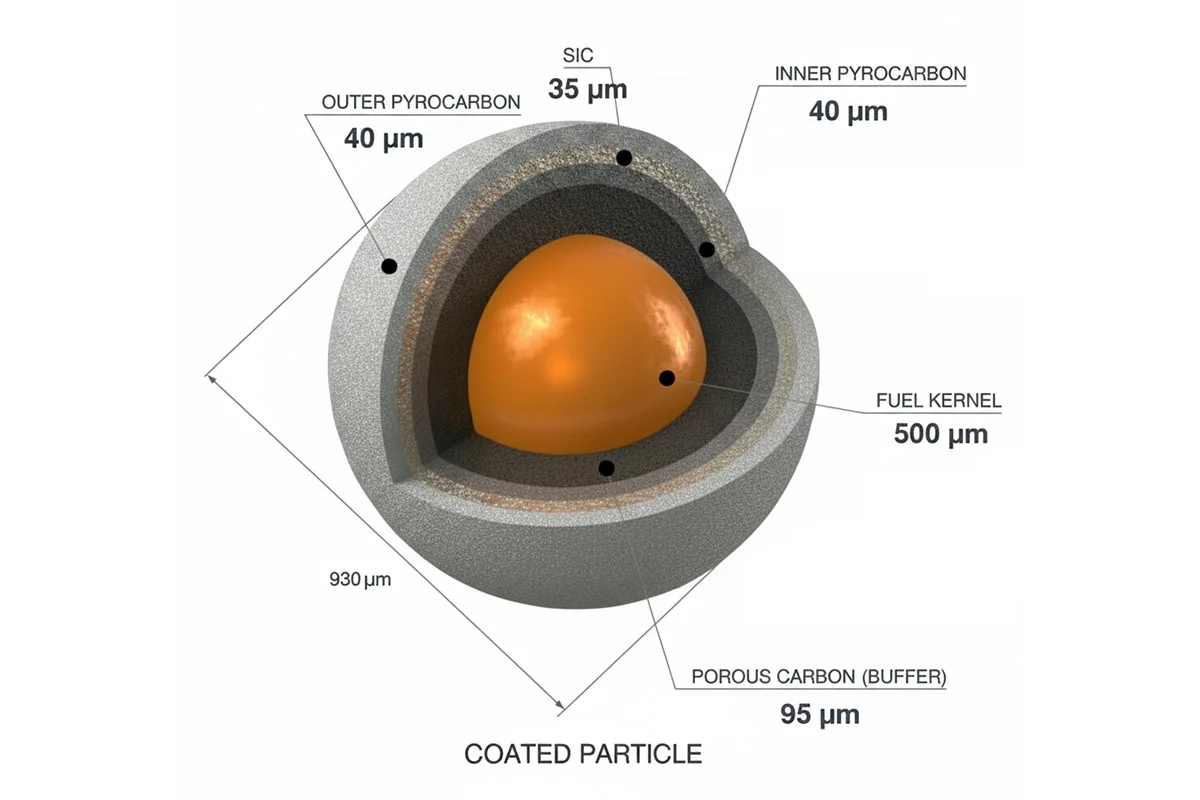
Outlook: TRISO Particle Development
TRISO particles represent a major advance in nuclear technology, combining safety, efficiency, and durability. By enabling reactors to operate at higher temperatures and minimizing risks from fission products, TRISO particles pave the way for a new generation of safer and more efficient reactors. The development and industrialization of TRISO particles could transform the future of nuclear energy.
PVA TePla is involved in many programs for manufacturing TRISO using our purpose turnkey fluidized bed reactor.

Interested in Fluidized Bed Reactor?