Metrology

Wafer Inspection

Technology Overview

Wafer Inspection

Wafer inspection is the process of examining wafers to detect stress fields and defects, measure layer thickness, and characterize material properties. Using advanced technologies, we ensure high quality and reliability by identifying imperfections and verifying the structural integrity of wafers. This is essential for efficient production and the performance of microelectronic devices.

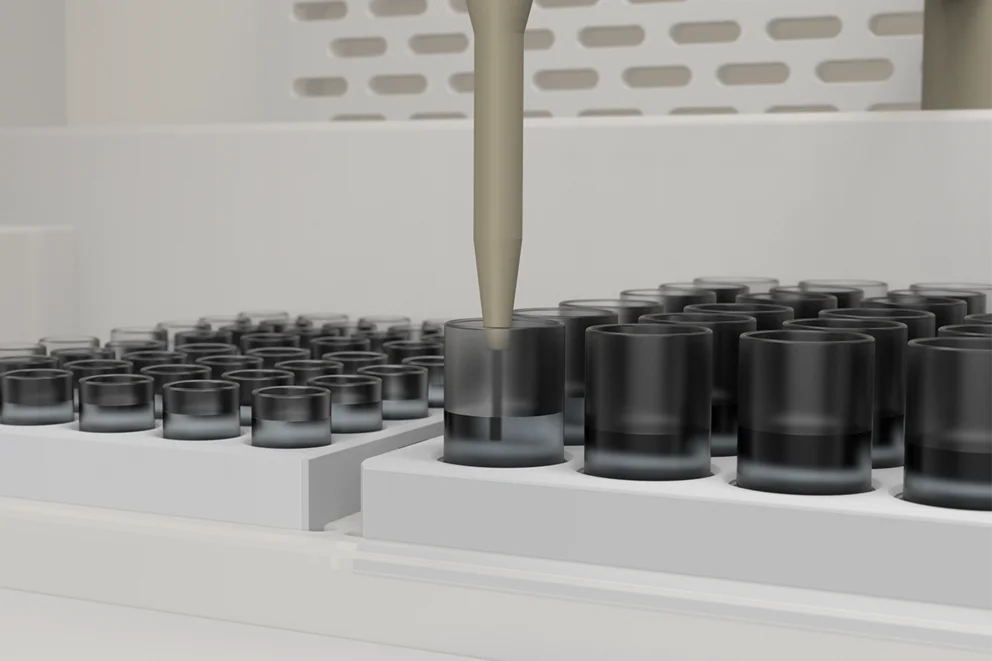
Array of scanning acoustic microscopy (SAM) transducers aligned above a sample surface for high‑precision, non‑destructive inspection.

Scanning Acoustic Microscopy

Scanning Acoustic Microscopy is a high‑resolution inspection technology that uses focused ultrasound to visualize and analyze internal structures and defects within materials and components.

Scanning Acoustic Microscopy
Detail SIRD-Scanning Infrared Depolarisation System

Scanning InfraRed Depolarization

Fast, contactless and non-destructive measurement and characterization of stress fields, defects and buried structures in semiconductor wafers.

Scanning InfraRed Depolarization
Sensor head inspecting a semiconductor wafer with colorful chip structures.

Hyperspectral Vision

Unique technology that provides insights in seconds regarding surface properties, contaminations and deviations in production.​

Thin Film Inspection
Scanning the wafer with the VPD drops to gather the contamination (PAD Scan)

Vapor Phase Decomposition

Early and cost-saving detection of trace elements.

Vapor Phase Decomposition
Wafer inspection with a microscope

Ellipsometry

Ellipsometry is a metrology technology that measures thin‑film thickness and material properties by detecting how polarized light is modified when it reflects from a surface.

Ellipsometry