
Liquid Metrology
Liquid Metrology monitors the chemical purity, concentration, and stability of liquid process chemicals through a controlled workflow from sample collection to result. The sample is collected from the process bath or supply line, prepared by dilution or conditioning, and analyzed by ICP-MS — delivering quantitative, element-specific contamination data at ultratrace levels down to ppt. The result is reliable, comparable data that makes small chemical changes visible before they affect process performance. Liquid Metrology is applied wherever chemical purity directly determines process outcomes: in semiconductor wet cleaning, CMP, electroplating, ultra-pure water monitoring, ultra-pure chemical production, and incoming chemical inspection — from stand-alone lab setups to fully integrated in-fab solutions.
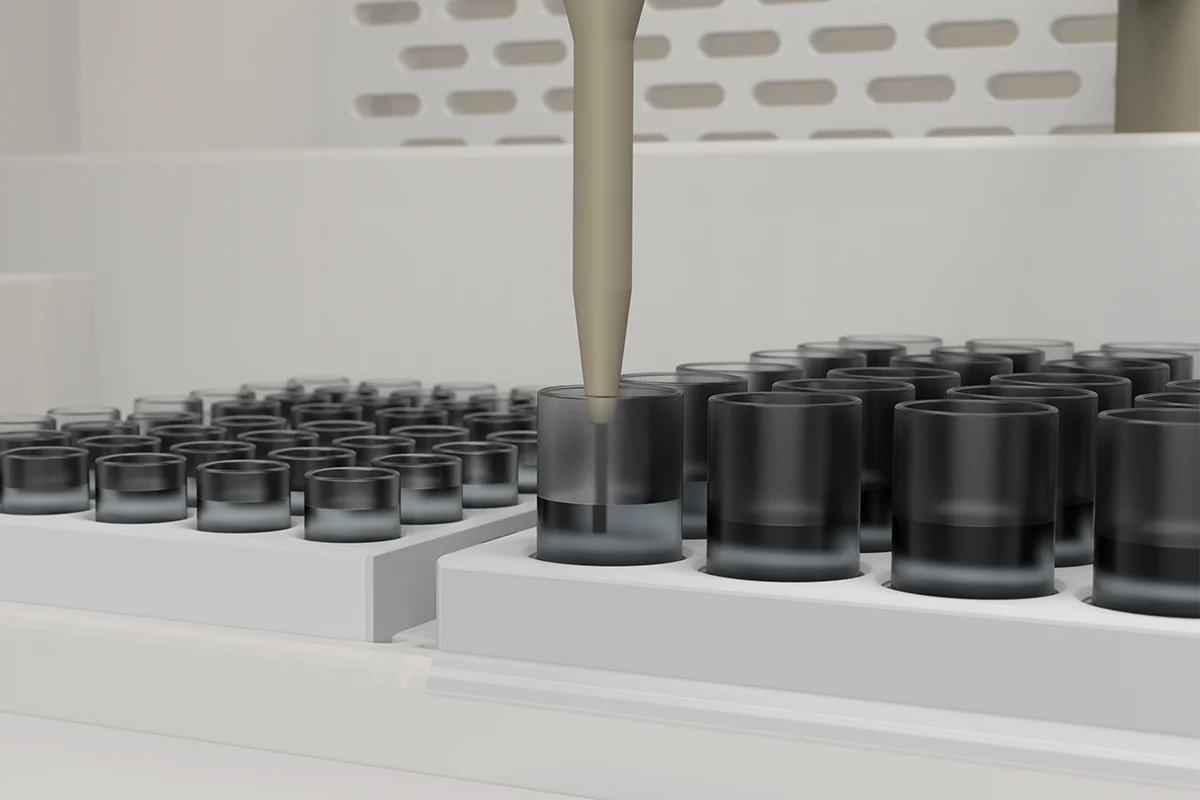
Liquid Metrology is not just a measurement step. It is the complete path from sample to result, and each stage defines the quality, consistency, and reliability of the outcome. Clean transitions between samples are essential in ultra-pure chemical environments. Effective rinsing prevents carryover, maintains cleanliness, and protects measurement integrity from run to run, making it a foundational part of any controlled workflow. For demanding semiconductor and ultra-pure chemical applications, the workflow matters just as much as the instrument itself.
Relevant industries
Semiconductor
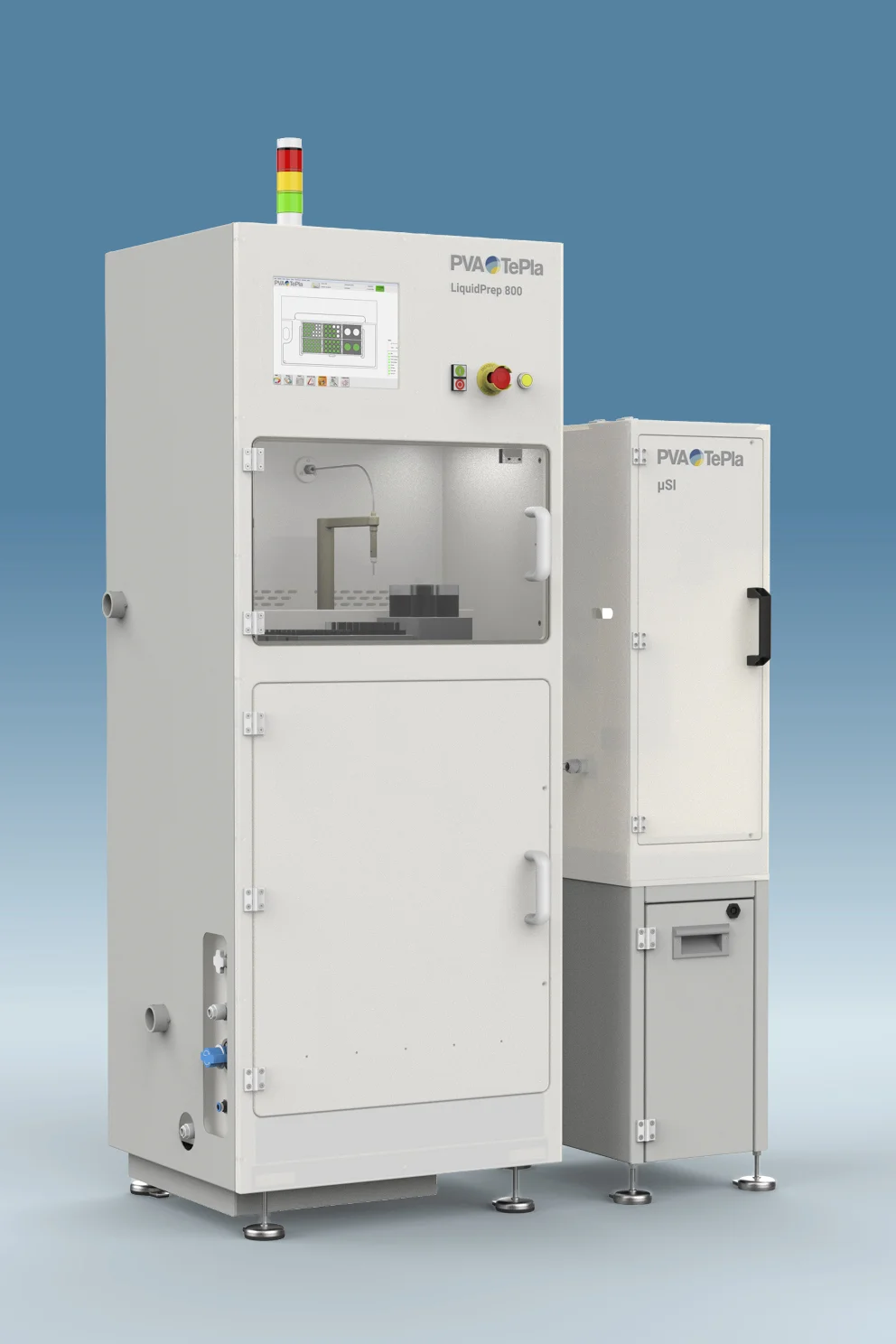
Advancing semiconductor technology demands more than faster chips. It demands purity at a level that was once unimaginable. Shrinking design tolerances put pressure on every step of the process — from chemical supply to in-fab analysis — and require detection limits that push conventional sample handling to its limits. LiquidPrep 800 is an automated calibration and dilution system designed for controlled chemical preparation ahead of ICP-MS analysis in semiconductor environments. It helps reduce human error and contamination risk during sample handling, enabling reliable chemical quality control data that can support alarm handling and timely response at the fab when chemical contamination levels are outside expectation.
The LiquidPrep 800 with µSI serves the full ecosystem where purity and precision are non-negotiable:
- Semiconductor Manufacturing
- Ultra-Pure Chemical Production & Supply
- Display & OLED Manufacturing
- Semiconductor Equipment & Metrology Labs
- Specialized Analytical Service Laboratories
FAQs
Why is Liquid Metrology so important in semiconductor manufacturing?
Semiconductor manufacturing is one of the most chemical intensive industries in the world. A single advanced fab uses hundreds of different chemicals, and many critical process steps require extremely tight purity control. That means Liquid Metrology is essential for protecting process stability, product quality, and operational confidence.
What happens if contamination isn’t caught early enough in semiconductor manufacturing?
Even one contamination event can lead to wafer loss and significant cost. It can also create downtime, increase process risk, and affect consistency across production. Effective Liquid Metrology helps reduce that risk by making small changes visible earlier.
Why are advanced nodes driving more demand for Liquid Metrology?
Leading-edge nodes such as 3 nm and 2 nm require tighter chemical control than ever before. As processes become more sensitive, the need for more precise preparation, better sample introduction, and more reliable results becomes even more important.
Why is UPW production and distribution included in Liquid Metrology?
Ultra-pure water is a critical utility in semiconductor manufacturing and must be maintained at very high purity levels. Monitoring helps protect consistency, reduce contamination risk, and support reliable operation across multiple process steps.
Why do many labs still struggle with Liquid Metrology today?
Many labs are working with workflows that were not designed for the demands of ultratrace chemical analysis. Common setups often rely on manual preparation, standalone analytical systems, or generic autosamplers that do not fully control dilution, rinsing, or carryover. This creates unnecessary risk and makes it harder to achieve stable, repeatable results.
Interested in Liquid Metrology?